
Most orders ship within one business day (we are closed on weekends). Larger orders, such as dolly's, benches, covers, etc. require an additional 7-10 days to process. We appreciate your business! Dismiss

Skip to Main Content
  • Music Publication & Distribution
  • Events & Competitions
  • Find a Harp Teacher
  • Contact
  • My Wish List
  • My Account
Harp.com
  • Harps
    • New Lever Harps
    • CPO (Certified Pre-Owned) Harps
      • Lever
      • Pedal
  • Harp Strings
  • Parts & Accessories
    • Amps
    • Benches
    • Cases & Covers
    • Delta Accessories
    • Harp Crowns
    • Dollies & Trolleys
    • eGift Cards
    • Electronics
    • Parts & Maintenance
    • Shipping Cartons & Trunks
    • Music Stands
    • String Bags
    • Study Aids
    • Tuning Keys & Holders
  • Sheet Music
  • Recordings & CDs
    • Children Recordings
    • Christmas Harp Music
    • Classical Harp Music
    • Contemporary & Modern Harp Music
    • Educational Recordings
    • Jazz Harp Music
    • Original Recordings
    • South American Recordings
  • Books
    • Biographical Books
    • Celtic Tradtions Books
    • Historical Books
    • Instructional Books
    • Instructional Materials
    • Methods & Training Books
  • Music Publication & Distribution
  • Events & Competitions
  • Find a Harp Teacher
  • Contact
  • My Wish List
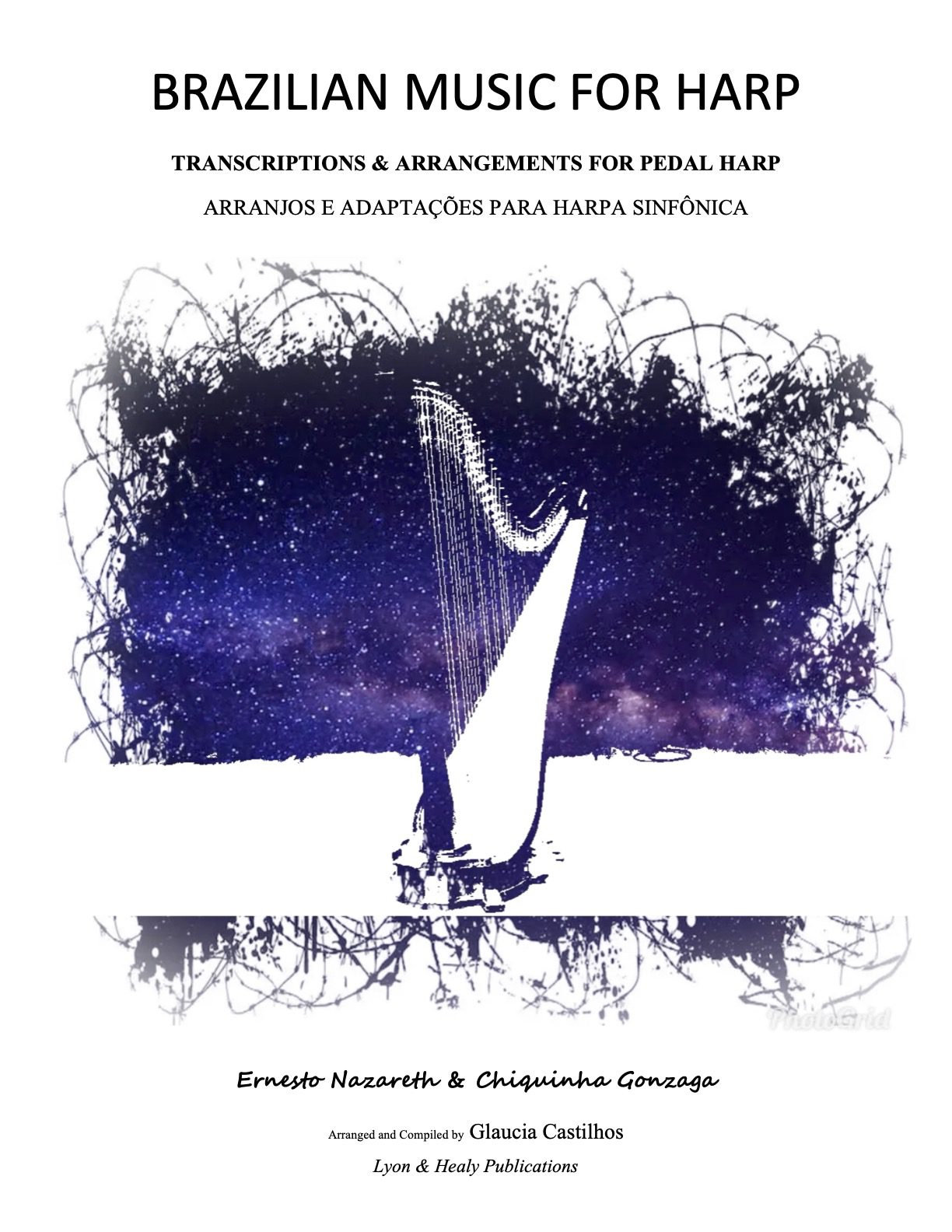
Brazilian Music For Harp (LHS)
SHARE

Brazilian Music For Harp (LHS)

Music of Ernesto Nazareth and Chiquinha Gonzaga, arranged by Glaucia Castilhos
LHS Downloadable Only
Product ID – 701070-100PDF

$25.00

BRAZILIAN MUSIC FOR HARP
TRANSCRIPTIONS & ARRANGEMENTS FOR PEDAL HARP
(ARRANJOS E ADAPTAÇÕES PARA HARPA SINFÔNICA)

The harp is one of the oldest instruments on record. There are many different models of this instrument, the most well known in Brazil being the Celtic harp, the Paraguayan harp and the symphonic harp.

The idea for this study came as a result of choosing the Brazilian composers who characterize the period and the style. Ernesto Nazareth and Chiquinha Gonzaga were two great pianists and composers who were extremely active in the musical life of Rio de Janeiro and their music was highly acclaimed during their lifetimes.

In order to adapt the chosen pieces by Nazareth and Gonzaga to the demands of writing for the harp, it was necessary to make changes to the originals in order to maintain their musical sense. As much as possible, the formal structure and harmony was preserved, that is, without free interpretation and with practical writing language viable for the harp which would maintain the character of the original piece.

The purpose of this work is to offer alternatives and a variety of the rhythms and musical styles which characterize Brazilian music through a language arranged and adapted for the symphonic harp, exploring new possibilities for expanding the vocabulary of this instrument.

The primary focus of this work is the all-important practice in educating musicians, and the contribution towards making up for the lack of Brazilian music for the harp. There was also an intention to innovate the traditional repertoire, giving support for harpists in search of current references, as the music of humans constantly undergoes change.

Download and Read a Sample of Arreliado from the collection Brazilian Music For Harp

Watch and Listen to a performance of Arreliado ::Click Here::

Download and Read the Author’s Preface as well as background information of the pieces [English and Portuguese]

  • Specifications

Glaucia Castilhos

Glaucia Castilhos is a musician of the Espírito Santo State Military Police, and has a Bachelor of Music degree from the Espírito Santo State Music University (FAMES). She has a Master’s Programme at Federal State University of Rio de Janeiro (UNIRIO), in the area of Teaching Musical Practices (PROEMUS), and she has a graduate certificate in Art Education from Afonso Cláudio Superior Institute (CESAP). As a harpist, she has worked in various orchestras: Espírito Santo Philharmonic Orchestra, Poços de Caldas Festival Orchestra, FAMES Symphonic Band, SESI- Espírito Santo Camerata Orchestra, Espírito Santo State Military Police Band, and has been the solo harpist of the FAMES Symphonic Orchestra. She has taught at various institutions in Brazil and abroad, including Espírito Santo Music University (FAMES), the PMES Junior Band Social Cultural Project, Espírito Santo Federal University (UFES), Javeriana University – Bogotá/ Columbia and Universidad Nacional de Las Artes- Argentina. She was a finalist at the Arpa Tierra 47 competition in Madrid/ Spain, with an improvisation on the theme of Iberian-American origin in 2017. Representative of “Nueva Esculea Argentina de Arpa”, in Brazil. Author of the book “Vamos Tocar Harpa”, released in Brazil in 2020.

Ernesto Júlio de Nazareth

Ernesto Júlio de Nazareth was born in the city of Rio de Janeiro, on the 20th of March, 1863. As a child he started studying the piano with his mother, an excellent pianist. When Ernesto Nazareth came on the scene at the end of the 1870’s, there was still no “genuinely Brazilian” music to speak of, rather music “Made in Brazil”. It was he who put down on paper the melodic form, who set out the harmonies with those rhythmic cells that would become representative of a national music. The melodic and rhythmic formula of Choro and the Seresta Carioca, the improvisational slang of the Maxixe, all of this was captured, refined, filtered, transfigured and condensed by Ernesto Nazareth in his work. The composer left a great variety of musical genre for posterity; “Tangos”, Waltzes, Polkas and Anthems, Sambas, Marches, Square-dances, “Schottisches”, Fox-trots, Romances, among others.

Chiquinha Gonzaga

The composer and maestra from Rio de Janeiro, Chiquinha Gonzaga stands out in the history of Brazilian culture and for her pioneering work in the fight for the country’s freedom. The courage with which she took on the oppressive patriarchal society and created a profession never before undertaken by a woman caused a scandal in her time. Acting in the rich musical environment of Rio de Janeiro in the Segundo Reinado (the Second Reign of the Empire of Brazil), in which Polkas, Tangos and Waltzes reigned supreme, Chiquinha Gonzaga didn’t flinch from including a great diversity of music in her piano music, without prejudice. It was for this reason that she ended up producing a fundamental body of work in the formation of Brazilian music.
Related Products
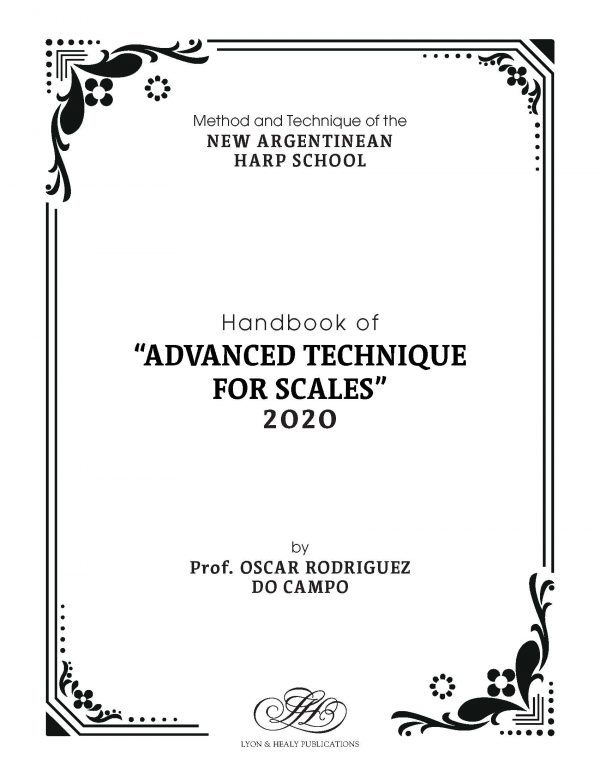
  • Handbook of Advanced Technique for Scales (English/Español) (LHS)
    Handbook of Advanced Technique for Scales (English/Español) (LHS)
    $40.00
Customer Service

Call Us Toll-Free:
1.801.355.2686
Call Toll-Free at 1.801.355.2686 Mon-Fri 8-4:00 MT

Lyon & Healy

Salvi

  • History of the Harp
  • Why Play the Harp
  • How to Choose a Harp
  • Replacing a Harp String
  • Contact Harp Specialist
Sign Up For Our Newsletter

Stay informed with Harp.com

Shop My Store on Reverb
2026 © Harp.com|
  • Contact
  • Terms of Use
  • Privacy Policy
  • Sitemap

Most orders ship within one business day (we are closed on weekends). Larger orders, such as dolly's, benches, covers, etc. require an additional 7-10 days to process. We appreciate your business! Dismiss

Loading Comments...